Active learning: multiply the adaptations, not the effort
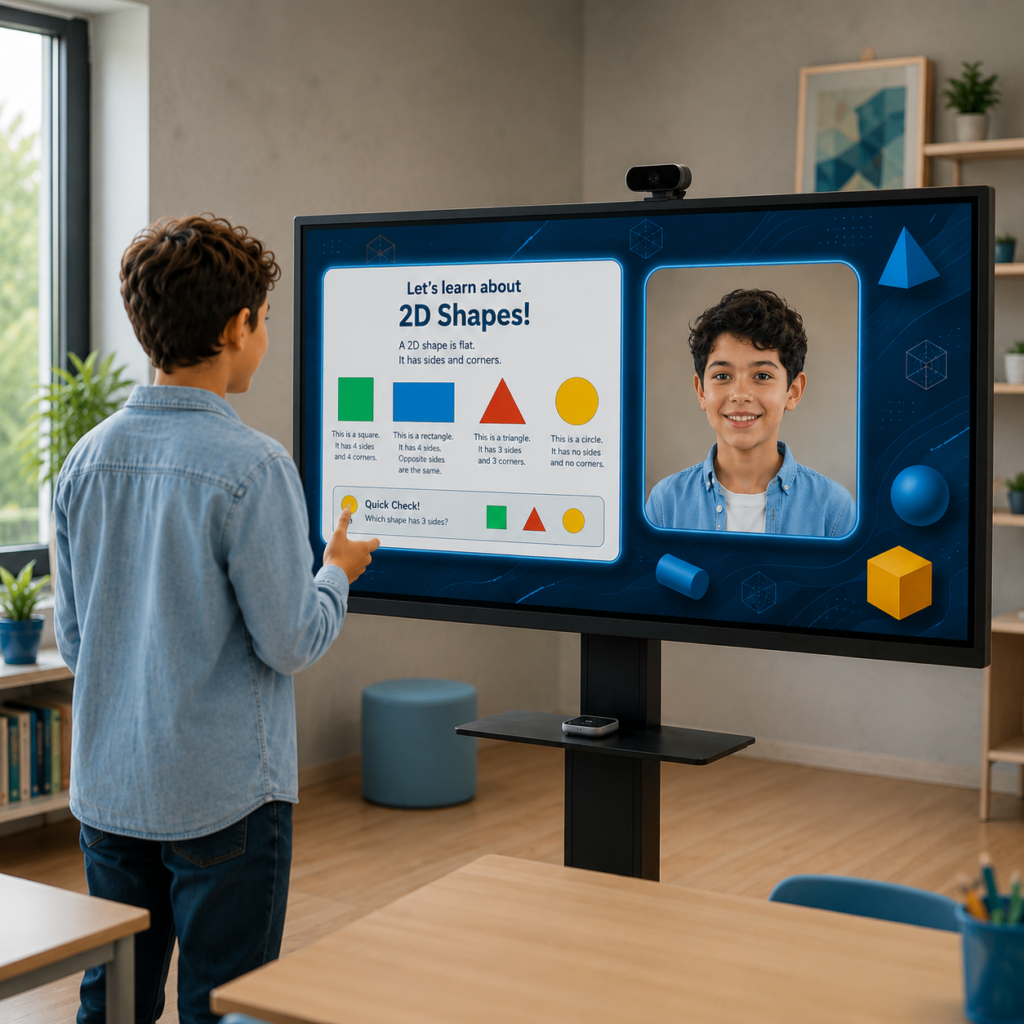
Table of contents
There’s a paradox every teacher knows, even if they rarely say it out loud: you teach a group, but learning only ever happens alone. The class is collective, the program is shared, the instructions are the same for everyone. And yet the memory trace forms inside each brain, at its own pace, along its own pathways. A single sentence spoken to a whole class meets as many histories, levels of attention, and ways of connecting the new to the old as there are students sitting in front of you.
This is the gap that any ambitious approach to teaching sets out to close. And the way to get there comes down to a single idea this article will defend: giving every student a genuinely individual learning experience, within a collective educational project. Not for a chosen few, not for a one-off lesson, but for everyone, in every classroom, year after year. It’s at that scale, and only at that scale, that active learning truly delivers on its promise.
Active learning means learning it yourself
Active learning works for one simple reason: it moves the student out of the receiver’s seat and into the producer’s. And producing is never neutral. Producing forces you to work things through, to choose an angle, to put it in your own words.
Several well-documented cognitive mechanisms explain why this works:
- The generation effect: we remember what we've formulated ourselves far more durably than what we've simply read or heard.
- Active retrieval: pulling knowledge from memory to put it to use consolidates it far more than passively rereading it.
- Metacognition: reflecting on your own approach, understanding how and why you learned something, boosts retention and makes those methods transferable to other situations.
The decisive point is that these mechanisms are individual by nature. What happens inside one student’s head at the moment they produce isn’t what happens inside the student’s next to them. A single instruction can open up as many learning trajectories as there are students. That’s where the richness lies, provided you have the means to make room for it.
The collective is built with individual differences, not in spite of them
Faced with a group, the temptation is understandable: standardize. Same exercise, same instructions, same expected answer. It’s easier to run, but it’s also what quietly dilutes everything active learning had made possible.
There’s another way, and it flips the reasoning around. A powerful collective project doesn’t flatten individual differences: it makes them visible, brings them into dialogue, and lets them converge without crushing them. Three well-known dynamics then come into play:
- The audience effect: you work differently, and often better, when you know your work will be seen by others. The presence of a real audience raises the bar students set for themselves.
- Peer learning: seeing how a classmate tackled the same question sheds light on your own approach and reveals paths you hadn't considered.
- Differentiated instruction: each student takes a unique route toward a shared goal, and it's the diversity of those routes that feeds the collective.
A class is never more energized than when every student feels their contribution matters precisely because it’s theirs, irreducible to anyone else’s. The collective draws its strength from individuals, not from erasing them.
What this approach demands of the tool
If we’re serious about giving every student an individual experience within a collective project, then the tool we bring in has to meet some specific requirements. These aren’t matters of convenience. They’re structural:
- No ceiling on production. If only a handful of students get to express themselves, the educational project shrinks. Volume has to follow the teaching, not the other way around. A whole class means as many learning paths as there are students and what works for one class has to be repeatable for the next without adding to the teacher's workload.
- A range of scenarios to match the range of students. A single tool has to make room for the student presenting a geopolitical map, the one breaking down a theorem, the one analyzing a text, the one demonstrating an athletic move. If the range of contexts is narrow, it's the diversity of students that ends up narrowed.
- A clear structure from the start. To keep this multiplying body of production legible and well integrated, the tool has to let you organize content into pathways and categories: chaptered sequences, families of scenarios designed by use case or by subject. Each capsule then finds its place within a coherent whole, and progression stays under control even as it grows richer.
- Ease of use that makes the tool disappear. Students should be able to focus on the content, never on the technology. The moment you have to learn the tool before the lesson, the teaching has already lost ground.
- Individualization within the collective gesture. Each student should be able to create their own production, with their own angle and their own voice, not just take part in a shared piece where their contribution blends into the group.
When these conditions come together, they open up an entirely different space.
From theory to the classroom: what actually changes
When the tool stops getting in the way, what opens up isn’t a catalog of activities. It’s a whole way of teaching coming into its own:
1. An open-ended instruction...
…calls for as many capsules as there are students: each one unique, all in dialogue with one another. The class no longer produces a single answer, but a constellation of answers.
2. A learning pathway...
…where each student chooses their angle, their format, their backdrop, then justifies it to their classmates. The choice itself becomes an act of learning.
3. An assessment...
…that becomes a conversation with an individual piece of work, rather than a grade stamped against a uniform rubric.
4. A class memory...
…that builds up year after year, with each student leaving their own mark on it.
And all of this stays organized. The goal is never to produce for the sake of producing, nor to flood students with content: it’s to give each one a path that fits who they are, within a clear structure, and to be able to do it for everyone. A sequence planned in advance, categories defined from the start, and the multiplying adaptations become a structured tree, one that grows without scattering.
There are as many variations on this approach as there are teachers to take it up, and as many ways of taking it up as there are individual students to bring it to life. What makes the project valuable is being able to multiply these adaptations without multiplying the effort they require.
Stoodeo Pro, the app built for this approach
It’s precisely from these requirements that the Pro subscription of the Stoodeo app was designed. Not as a technology in search of a use, but as a response to an educational project defined upfront. To each requirement set out above corresponds a feature of the tool:
- No ceiling on production. With Stoodeo Pro, as many capsules as there are students, with no time limit, and that possibility plays out again class after class, from one subject to the next, from one year to the next. A single teaching intention unfolds into as many adaptations as there are students and contexts, without that multiplication coming at the cost of extra work.
- A broad and ever-expanding library of scenarios. A growing range of backdrops and templates spanning a wide variety of subjects and contexts, continually expanding to keep pace with the diversity of projects.
- Pathways structured from the start. Templates are organized into families and categories, so that production fits into a chaptered progression rather than scattering. Teachers build a coherent tree of activities, growing it at their own pace while keeping control over the whole.
- Radical simplicity. The interactive display, the voice, the stylus. No technical chain, no learning curve to clear first. Students film the way they'd speak, and annotate live with a natural gesture, right on the screen: underline a word, highlight a passage, circle what matters.
- Built-in individualization. Each student creates their own capsule withtheir own angle, their own voice, their own backdrop, their own pace. Instant export, by USB drive or QR code, lets them leave with their production in hand: to watch it again, share it, and keep it as a record of their progress.
It’s this configuration of the tool, with Stoodeo Pro, that makes collective individualized teaching especially effective. Without these features, it stays a horizon you aim for. With them, it becomes ordinary, everyday classroom practice.
The tool disappears, the student emerges
Collective active learning isn’t a slogan. It’s a demanding project, resting on one quiet but decisive condition: the tool has to step aside for the teaching. When it steps aside, what becomes visible isn’t the technology : it’s the student. And it’s in that individual visibility, multiplied across every student in every class, that a real and lasting collective enthusiasm is born.
One question remains, then, for every teacher to ask in their own way: what their teaching might become if the tool no longer placed any limit on their ambition.